
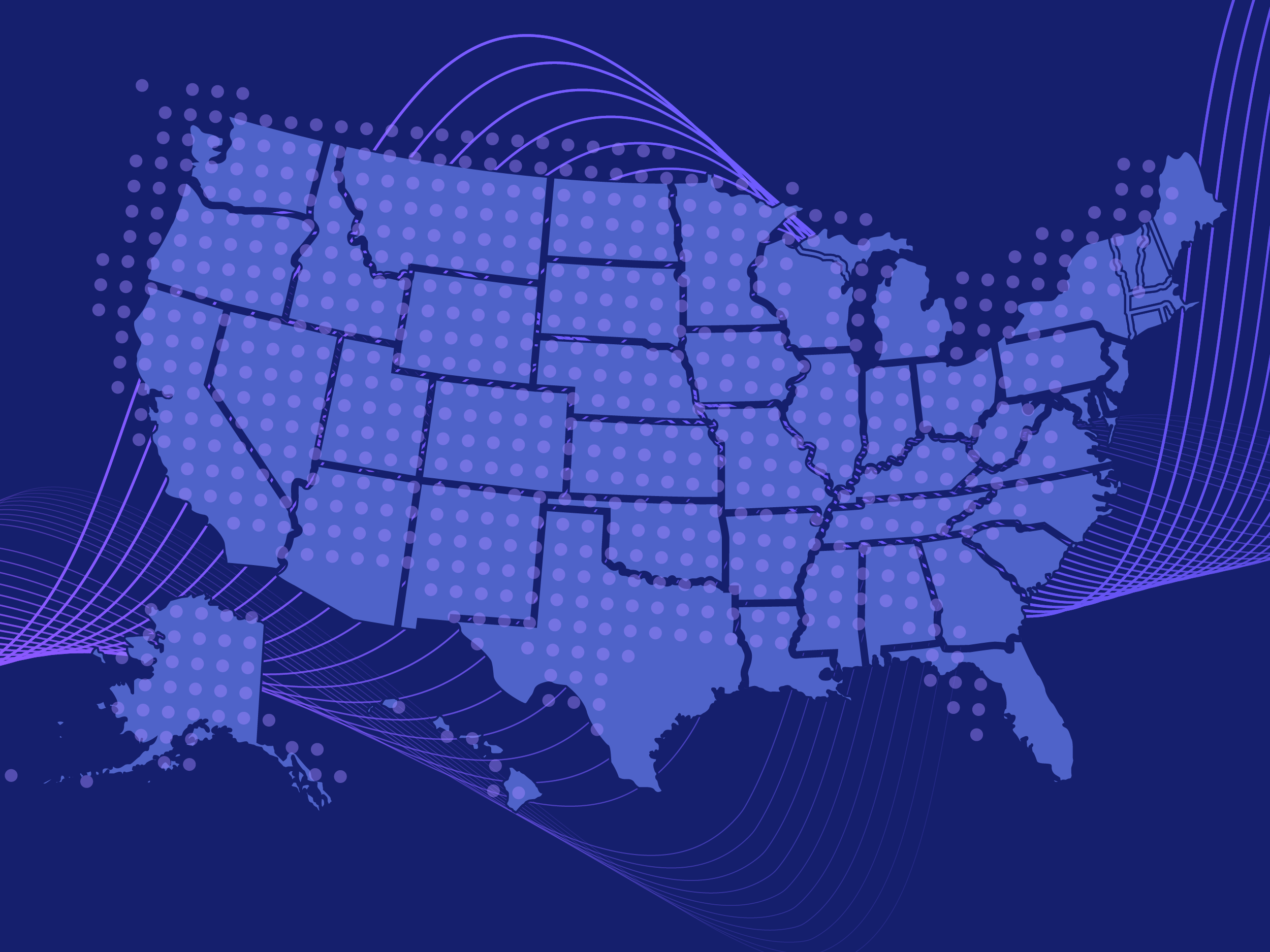
Over the past five years, Pearl Health has managed care for nearly 600,000 Medicare beneficiaries, facilitated over 370,000 care events through the Pearl Platform, and overseen more than $5 billion in healthcare costs. We operate across 43 states with more than 8,000 providers. And we only succeed if we help our partners improve their abilities to manage health outcomes and thereby generate shared savings.
That breadth has provided an evolving, real-world perspective of what value-based care transformation looks like across the full diversity of American healthcare. Five years in, we thought it was the right time to share the lessons that vantage has taught us – and how they've shaped what we're building.
The Landscape Is Not Uniform
It would be convenient if the path to success in value-based care looked the same everywhere. It does not.
A five-physician independent practice in rural Georgia faces fundamentally different constraints than a 2,000-provider health system in urban New York. Their patient populations differ in acuity, condition mix, access, and social complexity. Their data infrastructure ranges from deeply integrated EHR and HIE environments to settings where a fax machine remains the primary mode of care coordination. Their staffing models, payer mixes, and appetites for financial risk are equally wide-ranging.
Yet the value-based policy frameworks they operate under (e.g., MSSP, ACO REACH, and MA risk contracts) are generally national in design. While some models take the regional variances of healthcare costs into account, the foundational rules are the same whether you are managing patients who have diabetes in Phoenix or congestive heart failure in Pittsburgh.
This creates a problematic gap between the design of value-based models and the ability of individual care teams to succeed in them. These challenges can range from insufficient staffing, to adequate expertise able to translate complex model mandates into operational workflows, to historical headwinds that can leave organizations structurally underwater out of the gates (e.g., condition documentation that does not accurately capture full disease burdens). Regional landscapes differ widely with respect to specialist and acute/subacute facility options. While sufficient access is a nationwide problem, it is of an entirely different nature if Critical Access Hospitals are shuttering, closing off the only available sites to render certain types of care. The saying ‘healthcare is local’ applies in value-based care, too.
Five Observations from the Field
One size cannot fit all, but at the same time, we’ve sought out the common denominators in order to optimally and efficiently support our aligned providers. Our national footprint has surfaced patterns that hold regardless of geography or organization size:
- Organizations with dedicated talent and resources can pursue care transformation more aggressively, but regardless of size, everyone struggles to change quickly. Maintaining adequate motivation to take on this important, hard work requires observable milestones. While it can take multiple annual feedback cycles to compound results, identifying early wins can spur momentum. Breaking that down means measuring leading indicators on a constant cadence.
- Few organizations are willing to assume downside risk unless they already have a demonstrated savings track record. As organizations scale, their willingness to accept downside risk grows, but this limits who can adopt advanced models. Many smaller groups feel like they must affiliate with larger organizations (whether health systems or enablers like Pearl) to take risk safely. The key is picking the right partner for your organization’s specific needs.
- Data is the enabling substrate. Real-time access to claims, acute and post acute admissions, scheduling, clinical, social and demographic data allows for tailored, timely interventions critical to improving outcomes. At the same time, while it would seem that those with sophisticated care delivery systems have immediate tailwinds, those same organizations also often have the hardest time isolating the signal from the noise. Simple guidance and prioritization are key to organizing complex machines to move effectively, and AI is essential for democratizing access to actionable insights that result in better and more proactive care.
- Across 43 states and the broad expanse of VBC capabilities and experience, one truth is universal: everyone has questions. Providers want to know what "good" looks like, how they compare to peers, and what to prioritize next. The organizations that compound fastest are those that get clear, trustworthy answers to best practices and benchmarks and act upon them.
- Real change requires empowered champions within each organization. At the same time, motivation is generally not the limiting reagent to desired impact, capacity is. The ambition to deliver better care exists broadly. The staffing, tooling, and workflow support to act on that ambition at speed does not. Those champions must be equipped with teams, tools and insights necessary to fulfill the organization’s goals.
Primary Care Cannot Do It Alone
Primary care, no matter how motivated or well-equipped, cannot bend the cost and quality curve in isolation. The majority of healthcare spending flows through specialists, acute facilities, post-acute providers, and ancillary services that sit outside the primary care practice's four walls. A primary care provider (PCP) can identify a rising-risk patient and initiate the right referral, but if the downstream specialist is operating in a fee-for-service system without alignment to the shared savings equation, the incentives diverge at the exact moment alignment matters most.
This is not a theoretical concern. We see it routinely: a provider doing excellent work on chronic disease management and care gap closure, only to watch savings erode because of uncoordinated specialist utilization or unoptimized post-acute workflows. The provider did her job. The network around it did not operate in concert.
Full network alignment is essential to compounding the gains that primary care initiates. That means extending data visibility, shared accountability, and coordinated workflows beyond the PCP. Solving for that requires both strategic partner engagement and technology that can facilitate coordination across organizational boundaries without requiring every participant to adopt a uniform operating model.
Solving the Last Mile
The last-mile problem is where national scale must meet local execution. Many enablers believe this requires local, hands-on support. At Pearl, we believe these are the areas care teams are best at and, by freeing them from the burdens of unnecessary administrative tasks and arming them with powerful analytics, we can enable them to do the good work of holistic patient care.
AI is central to bridging national scope with regional needs. Machine learning models integrate data from across disparate sources throughout the Medicare landscape to identify patterns and manage the competing algorithmic forces that providers face daily. Critically, this synthesis can be injected into the workflows where organizations already drive impact, making change management easier, more intuitive, and less burdensome for provider organization leadership to instantiate and maintain. Empowered with the clarity of that data-driven prioritization, we can also leverage agentic AI to automate the interactions that occupy too much of a care team's time and resources.
Critically, AI is also rapidly enabling personalization at scale. A patient in Appalachia with transportation barriers and a patient in Miami with language access needs require different interventions routed through different pathways. Algorithmic intelligence sufficiently advanced and nuanced can both guide individual patient recommendations and identify the most impactful and actionable panel-wide trends, serving as virtual at-the-elbow expert support. National scale, powered by intelligent automation, can allow Pearl to match the right resource to the right patient without requiring each provider to build that connective tissue independently.
The pairing of advanced models that can handle ever-evolving nuance with increasingly sophisticated agents that can automate workflows will be the critical unlock that can solve both our nation’s healthcare spending problems and the burnout that is plaguing our invaluable healthcare workers.
Looking Ahead
National scale in value-based care enablement is not about imposing a single playbook across the U.S. It is about learning from the full heterogeneity of American primary care, and then building the technology and support infrastructure that allows every care team, regardless of size or geography, to deliver on the promise of better outcomes at lower cost.
At the same time, it is has become increasingly clear that every provider group requires the same three ingredients to succeed:
- integration of disparate data to create unified insights and clear guidance inserted into operational workflows,,
- automation of work that humans can now oversee, rather than execute, and
- expert support in prioritizing opportunities and engendering organizational change to achieve them.
That is the work we are doing, and these are the lessons guiding it.

Pearl Health is powering the future of healthcare
We’re a team of physicians, technologists, and risk-bearing experts with a passion for enabling our partners to deliver better care and reduce health system costs. Want to learn more?