

As we enter a new year, it’s worth pausing to reflect on how progress actually happens.
Pearls are formed slowly, through layers built over time. They are not the result of a single moment, but of consistent pressure, adaptation, and refinement. In healthcare—and particularly in the transition to value-based care—the same is often true. Durable change rarely comes from a single breakthrough. It comes from sustained effort, thoughtful iteration, and the discipline to build through complexity.
At Pearl Health, 2025 was a year defined by that kind of work. We focused on strengthening the foundations required to support proactive care at scale: deepening our platform, expanding our network, and investing in the people and systems needed to operate across increasingly complex value-based environments.
As we look back on the year, we’re proud of the progress made—and clear-eyed about the work that remains. Below are some of the moments from 2025 that shaped our path forward.
#1 Advancing Proactive Care Through Actionable Insights and Automation
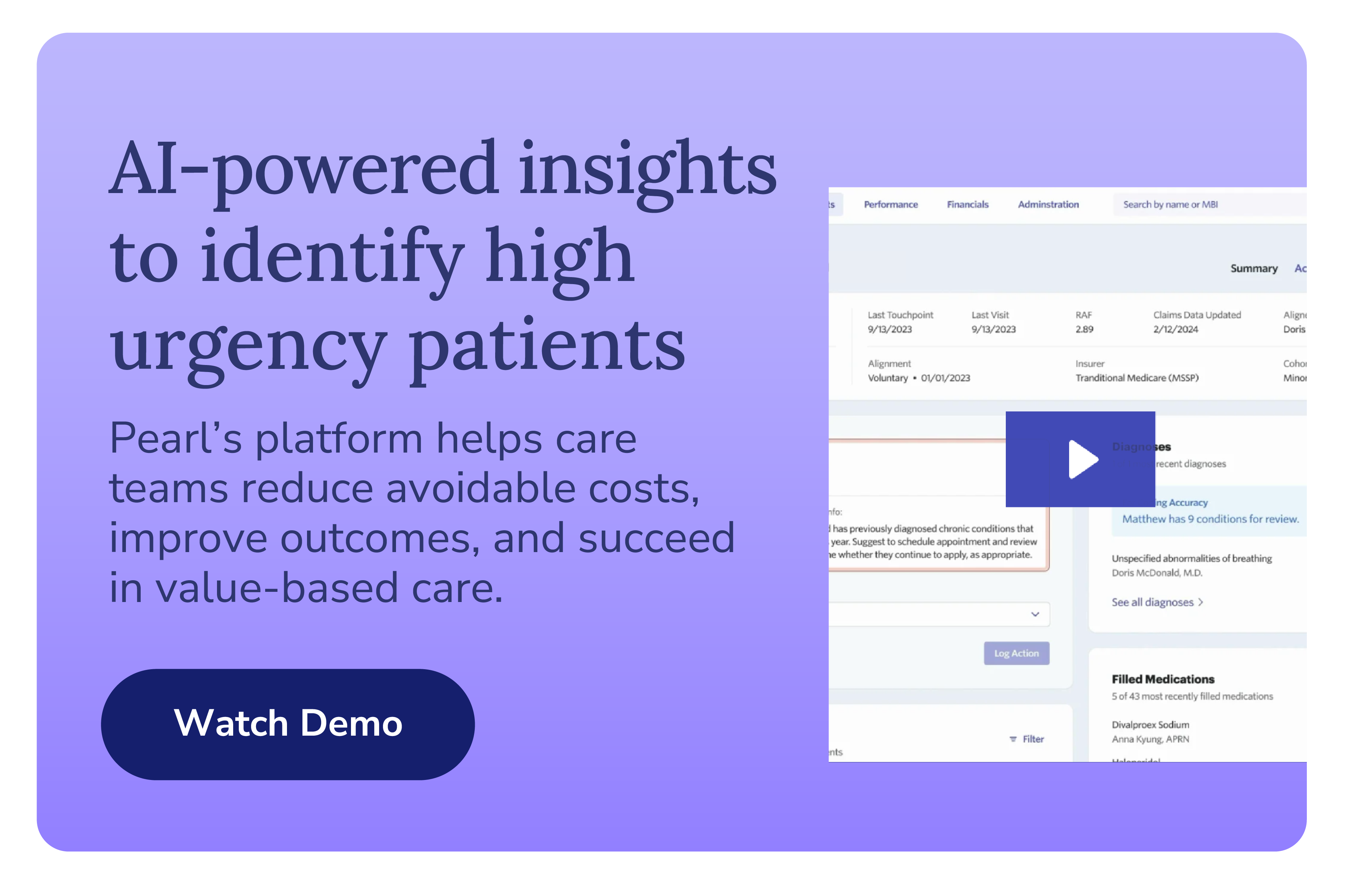
We first introduced clinical signals in the Pearl Platform in 2022 and 2023 to help providers deliver more proactive care—surfacing patients at risk for preventable emergency department visits, unplanned admissions, missed follow-ups, and gaps in transitional care management and chronic care management. In 2024, we expanded these capabilities to support more structured care coordination, including Chronic Care Management and identification of patients eligible for CMS’s GUIDE dementia care program.
In 2025, we continued to build on this foundation by broadening the scope and consistency of the signals that care teams rely on day to day. As of this year, the Pearl Platform supports proactive outreach across preventive care, transitions of care, chronic condition management, risk of avoidable utilization, dementia care, and medication adherence—helping teams focus their limited time and attention on patients most likely to benefit from timely intervention. Rather than overwhelming users with undifferentiated care gaps, we remained focused on patient-centric prioritization and actionability: making it clear who needs attention, why, and what to do next.
In 2025, we also refined how insights translate into action to better represent both the breadth and specificity of suggested actions for care teams. We streamlined workflows for complex care coordination by proactively initiating patient outreach and scheduling—reducing manual handoffs, increasing follow-through, and improving consistency across large patient panels—while leaving clinical decisions about timing, appropriateness, and intervention in the hands of providers.
Anonymized Patient Stories
Here are some real-life examples of the impact that the Pearl Platform had on our patient population in 2025.

Avoiding an Unplanned Admission Through
Timely Follow-Up
Bob Jones is a 74-year-old patient with multiple chronic conditions, including congestive heart failure, type 2 diabetes, and chronic kidney disease. In early 2025, Pearl’s predictive algorithm identified Bob as being at elevated risk for an unplanned admission following a recent hospitalization. The platform surfaced a clear next step: schedule a primary care visit within 14 days.
Bob’s practice contacted him and scheduled a visit for the following week. During that visit, the care team reviewed Bob’s chronic conditions and scheduled an overdue Annual Wellness Visit. In the weeks that followed, Bob met with his cardiologist and nephrologist, helping ensure continuity of care across providers.
Since that initial outreach, Bob has had multiple coordinated follow-up visits, and more importantly, hasn’t returned to the emergency department or been hospitalized—reflecting a more proactive, preventive approach to managing complex chronic conditions and a strengthened relationship between Bob and his primary care team.

Managing Chronic Conditions Through
Coordinated Transitions of Care
Maria Rojo is an 80-year-old patient with multiple chronic conditions, including congestive heart failure, diabetic retinopathy, and vascular disease. In fall 2025, Maria experienced two hospitalizations within a short period due to complications from peripheral neuropathy. Following her most recent discharge, the Pearl Platform triggered a transition-of-care alert, highlighting the need for timely follow-up and care coordination.
Within 24 hours of discharge, a Pearl care manager contacted Maria to review medications, address immediate questions, and flag clinical urgency to her primary care team. A post-discharge follow-up visit was scheduled promptly, allowing Maria’s PCP to reestablish care after a period in which much of her treatment had been managed primarily by specialists.
Since that intervention, Maria has had coordinated follow-up with her primary care provider and continues to receive longitudinal care management support. Importantly, she has not returned to the hospital, reflecting improved continuity of care, clearer medication management, and a more proactive approach to supporting complex, chronic needs beyond the point of discharge.
These efforts reflect a broader set of product principles guiding Pearl’s evolution: simplicity over sprawl, patient prioritization over dashboards, and steady progress toward automation that reduces burden rather than adding complexity. As care delivery and AI regulation continue to evolve, we’ve expanded capability deliberately to design for interoperability with EMRs, align with existing workflows, and operate within the clinical and governance realities our partners face.

The scale of activity on the platform reflects our focus on impact and execution. In 2025, care teams using Pearl took 163,546 actions supporting proactive outreach and coordination at moments where timing matters most. These actions included 15,989 newly scheduled Annual Wellness Visits and 18,665 post-discharge visits, helping practices stay connected with patients during preventive and transitional periods closely tied to longer-term outcomes.
As we look ahead, we’re continuing to build on this progress by expanding the range of clinical needs that Pearl can support, strengthening the link between insight and execution, and moving deliberately toward greater automation that helps care teams do more without adding burden. This evolution is increasingly shaped by how providers engage with the platform day to day, creating a feedback loop between real-world use and product development that moves us toward more systematic, automated execution over time.
#2 Nationwide Growth: Strengthening & Diversifying Our Network
Building on several years of rapid growth, Pearl’s network expanded in 2025 to include partnerships with some of the most respected health systems and physician networks in the country, representing more than 225,000 patients and over 5,000 providers.
In 2025, Pearl partnered with a wider range of primary care organizations than ever before, including: large, integrated health systems caring for tens of thousands of patients across multiple markets, physician-led networks coordinating care across independent practices, and multi-state groups operating simultaneously in Traditional Medicare, Medicare Advantage, and commercial value-based arrangements. In many cases, these organizations were navigating different stages of readiness within the same enterprise, launching new risk programs in one market while optimizing performance in another. Supporting that complexity requires alignment across clinical capabilities, operational infrastructure, and partnership philosophy, an approach that positions Pearl to support outcomes at scale as organizations expand across markets, models, and Medicare populations over time.
.gif)
As the network expanded, Pearl supported organizations with very different levels of scale, maturity, and risk experience. Some partners brought deep experience managing downside risk but needed better tooling to scale proactive care across large patient panels. Others were earlier in their value-based journey, seeking infrastructure that could help them participate confidently without disrupting existing workflows. Across the network, patient populations varied widely in acuity, payer mix, and geographic context, reinforcing the need for workflows and infrastructure that work reliably across Traditional Medicare, Medicare Advantage, and commercial populations, while allowing organizations to meet patients where they are.
The composition of the network also continued to evolve toward greater organizational sophistication. In addition to maintaining a nationwide network of independent primary care practices, 2025 marked a meaningful increase in partnerships with larger, multi-market organizations managing significant patient populations across multiple contracts and geographies. These partnerships reflect growing confidence in Pearl’s ability to support value-based care at scale, while maintaining a focus on primary care–led models and long-term patient relationships.
We’re proud to welcome these new partners to the Pearl community. As the network continues to expand, our focus remains on fostering collaboration across organizations of all sizes, supporting shared learning, scalable execution, and continued progress toward more proactive, value-driven care delivery. This evolution reflects where value-based care itself is headed: toward broader accountability, deeper coordination, and infrastructure built to support long-term performance.
#3 ACCESS, LEAD, and the Path Forward for Medicare Risk
In 2025, the policy environment for value-based care moved toward greater focus and durability. After years of experimentation and a period of recalibration, CMS’s direction became clearer: higher expectations for scalable impact and a sustained commitment to accountable care.
From primary care to large integrated health organizations, the question is changing from, “Should we participate in risk-bearing arrangements?” to “How can we build the capabilities required to succeed amid evolving rules, rising complexity, and persistent resource constraints?”
A Clearer Direction from the Innovation Center
Early in the year, the CMS Innovation Center announced the early termination of several payment models, signaling a more focused approach to innovation. While these decisions introduced near-term uncertainty for some participants, they also clarified a longer-term priority: CMS is narrowing its focus toward models that demonstrate durable impact—particularly those that embed prevention, accountability, and stronger alignment between incentives and outcomes.
That direction became more concrete as the year progressed. CMS introduced LEAD, a new Innovation Center model that reinforces provider-led accountability and risk-bearing care as central to Medicare’s future. Just as importantly, LEAD’s 10-year horizon provides a clearer signal of policy durability, addressing a core concern that many organizations have had as Innovation Center models have evolved over time.
In parallel, CMS continued to expand outcomes-based approaches for patients with complex, chronic needs. Programs like ACCESS reflect growing recognition that episodic, visit-based care is insufficient for managing today’s population of aging patients living with multiple chronic conditions, and that better outcomes depend on longitudinal engagement, tighter care coordination, and more consistent follow-through between visits.
Taken together, these developments tell a coherent story. ACCESS expands what CMS expects care teams to manage. LEAD reinforces how organizations will be held accountable over time. Both raise the operational bar and reinforce the need for partners like Pearl that help organizations identify risk earlier, intervene more consistently, and support patients beyond the four walls of the clinic.
From Policy Direction to Operational Reality
The implication for providers is clear: value-based care is becoming both more durable and more demanding. Organizations are being asked to assume greater financial accountability, coordinate care across broader patient populations, and demonstrate measurable results—often while continuing to operate in parallel fee-for-service environments. Meeting these expectations consistently will require platforms that can systemize performance across models and mature alongside organizations over time, rather than relying on manual intervention or episodic programs.
The organizations pulling ahead are those closing the gap between policy direction and execution—building capabilities that can adapt across models, mature over time, and support care teams without adding friction.
That theme surfaced repeatedly in our conversations with providers, policy leaders, health system executives, and technologists throughout the year. Their perspectives are captured in Pearl Health’s Top 50 Value-Based Care Thinkers of 2025, which reflects an industry that has moved beyond theory and into the harder work of implementation.

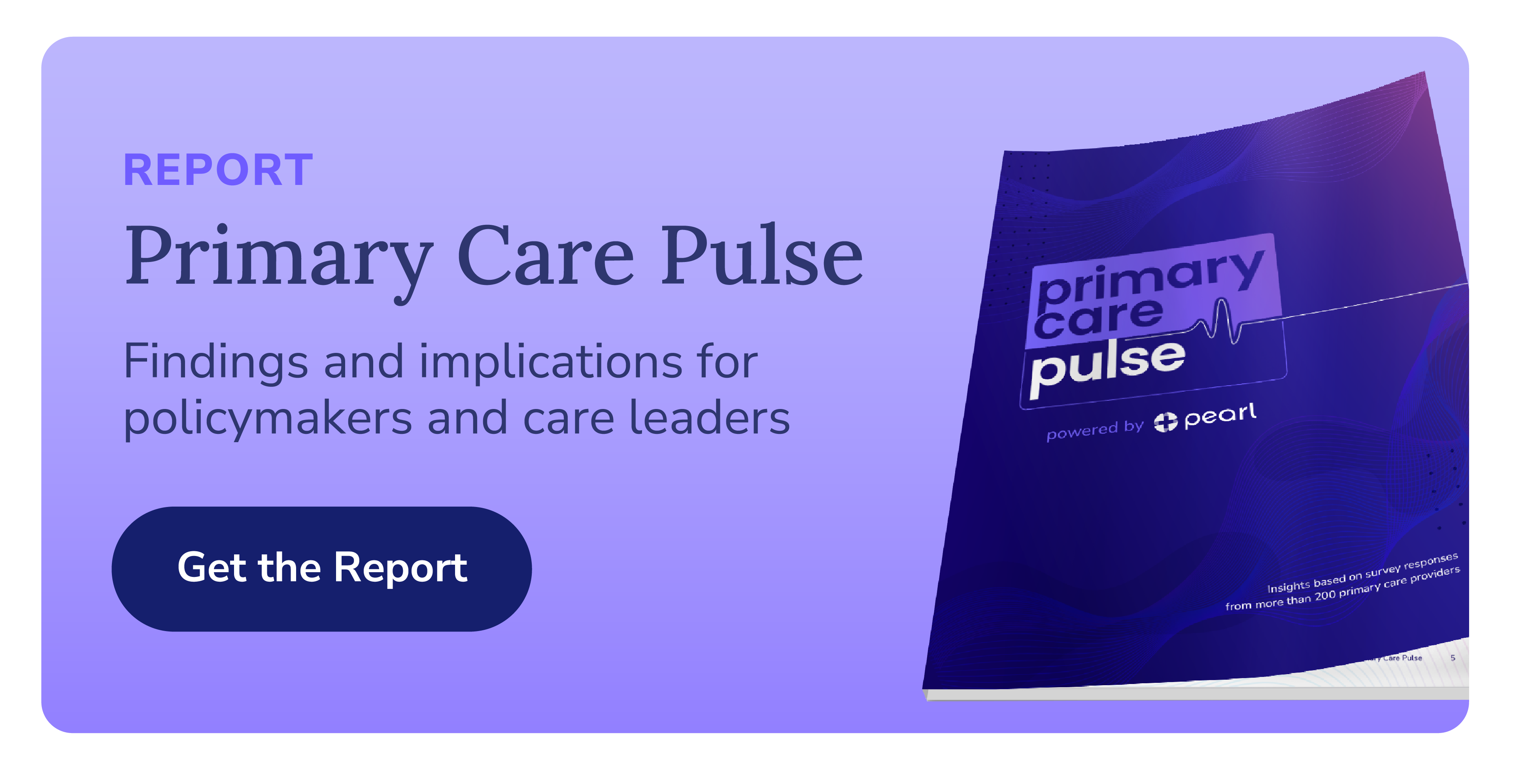
#4 Taking the Pulse on Primary Care
As Pearl Health’s network continued to grow in 2025, so did our proximity to the realities of frontline primary care. Across partnerships with physician networks, health systems, and independent practices, we spent the year working alongside care teams navigating the shift from volume to value—often under significant operational and financial pressure.
Across these conversations, common themes emerged. Participation in value-based care is accelerating, but readiness remains uneven. Expectations are rising faster than the systems designed to support them. And while policy direction is increasingly clear, the path from intent to execution remains difficult to navigate.
To better understand—and reflect back—what we were hearing across the field, we released Pearl Health’s 2025 Primary Care Pulse Survey.
What the Data Reveals
The Primary Care Pulse was designed to capture, at scale, the economic, operational, and technological realities shaping primary care today. The findings reinforce a tension we saw repeatedly throughout the year.
While two-thirds of physicians report participating in advanced payment models, fewer than half believe their organizations are equipped to deliver proactive, preventive care—and only a third report having access to technology that meaningfully supports outcomes-based performance. Participation is rising faster than operational capacity.
At the same time, the survey surfaces the fragility of primary care economics under this transition. Physicians report persistent misalignment between compensation and the work required to manage chronic disease, increasing volatility in cash flow, and limited capacity to care for growing and more complex patient panels.
These pressures show up in predictable ways: missed preventive opportunities, fragmented care experiences, and chronic conditions that escalate before intervention is possible. For organizations operating under value-based arrangements, the consequences are both clinical and financial.
Adoption Without Alignment
Despite growing participation, many physicians report limited confidence that value-based care strategies are being implemented deliberately or optimized across providers. New contracts are often layered onto operating models still built for volume, leaving clinicians to balance competing priorities without the structural support needed to reconcile them.
In practice, this results in uneven performance, rising frustration, and skepticism that value-based care will ultimately deliver on its promise—despite broad agreement that the direction is necessary.
A Field in Transition
Taken together, the findings reflect a field in motion. Value-based care is no longer optional, but the infrastructure required to make it work consistently has yet to fully catch up.
The year ahead will reward organizations that move beyond participation alone—those that invest in alignment, redesign workflows, and equip care teams with tools that make proactive, coordinated care possible at scale.
#5 The People Behind the Progress
Over the past year, we’ve welcomed and elevated strategic leaders who bring invaluable experience, fresh perspectives, and a deep commitment to Pearl’s mission. They joined the organization at a pivotal moment in our evolution—as our network expanded, our platform matured, and the demands of operating at scale grew more complex—and are already making a meaningful impact across the company.
Together, these leaders are strengthening how we collaborate, innovate, and execute, helping Pearl continue to grow with intention while staying grounded in the work that matters most: enabling better outcomes for patients and sustainable success for the organizations that care for them. As the scope and complexity of our work increases, this depth of leadership is critical to maintaining speed, accountability, and execution quality without relying on linear growth in headcount.
Leadership Hires in 2025
In 2025, we welcomed senior leaders across legal, operations, product leadership, and market leadership:

Promotions in 2025
Alongside new leadership hires, we recognized and elevated leaders across Pearl whose scope and impact expanded meaningfully as the organization scaled:

Together, these leaders bring the operational, clinical, technical, and analytical experience required to help Pearl grow with intention. Their work strengthens how we collaborate across teams and supports our ability to deliver on our mission as the demands of value-based care continue to evolve. We’re grateful for their contributions in 2025 and look forward to continuing this work together.
We’re expanding in several functions, including engineering, data science, product, sales, marketing, and customer success. Interested in joining our team in 2025? Check out opportunities on our Careers Page.
Thank You for the Partnership
As 2025 comes to a close, the direction of travel in healthcare is unmistakable. Value-based care is no longer a future aspiration—it is becoming the organizing principle for how care is financed, delivered, and evaluated, especially in government pay models. At the same time, the gap between participation and readiness remains real, placing new demands on clinicians, care organizations, and the systems that support them.
This year, Pearl focused on doing the work required to narrow that gap. We invested in capabilities that help care teams move from insight to action, supported a growing and increasingly diverse network of providers, and deepened our understanding of what it takes to operate effectively across models, populations, and markets. Much of this progress happened incrementally—through iteration, partnership, and learning—but taken together, it reflects meaningful forward momentum.
We enter the year ahead with clarity about both the opportunity and the responsibility in front of us. The transition to value will continue to test assumptions, strain systems, and demand new ways of working, placing a premium on execution, automation, and the ability to deliver outcomes reliably at scale. We’re grateful to the providers, partners, and teammates who shaped our progress in 2025 and who will continue alongside us in 2026, as we build toward a more practical, durable healthcare system centered on better outcomes for patients.

Pearl Health is powering the future of healthcare
We’re a team of physicians, technologists, and risk-bearing experts with a passion for enabling our partners to deliver better care and reduce health system costs. Want to learn more?